10 Steps to Inspect a Used Excavator Before You Buy
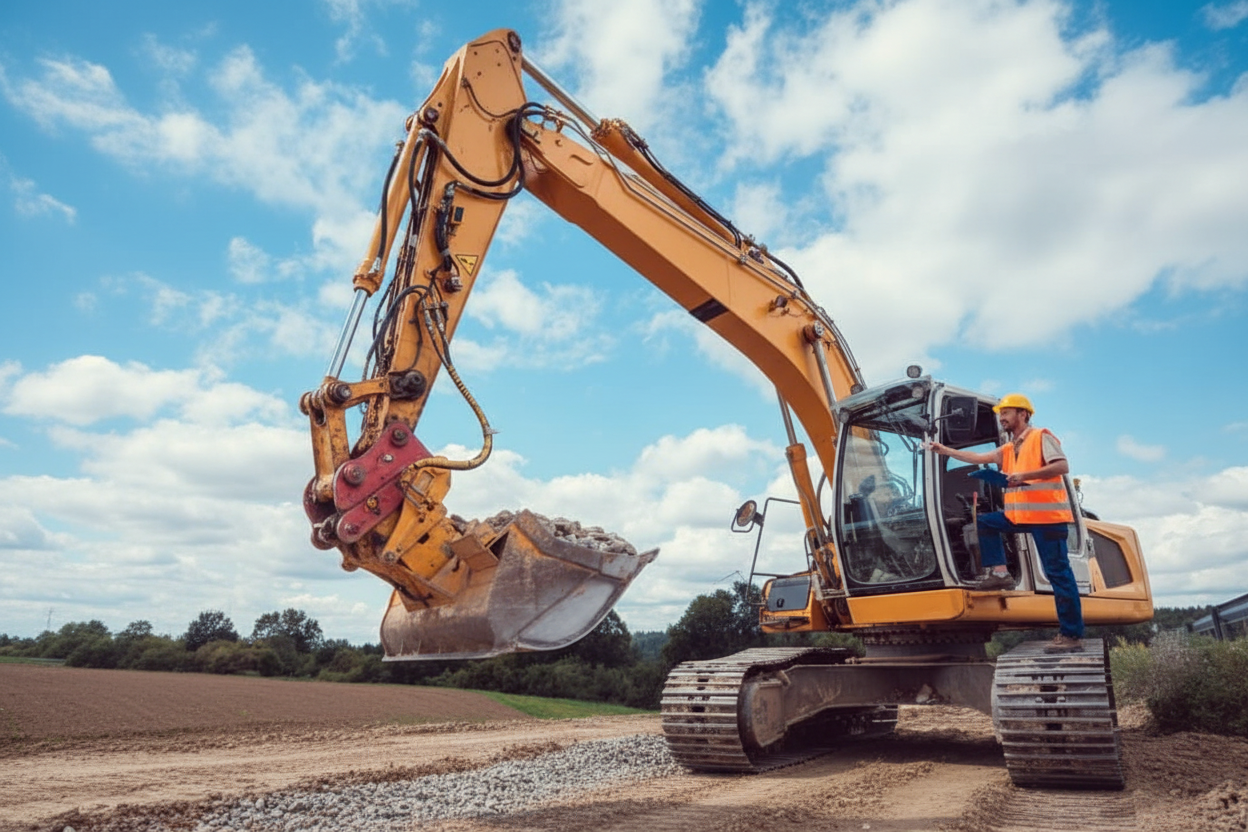 A used excavator can save you 50% to 75% compared to buying new. That's real money—tens of thousands of dollars staying in your pocket. But a bad machine can eat up those savings in repair bills faster than you'd expect.
At Fair Trade Machinery, we've helped buyers across 50+ countries source quality second-hand excavators from China. We've seen it all: machines that look spotless in photos but break down within weeks, and 10-year-old units that run like new. The difference comes down to one thing—a proper used excavator inspection before the money changes hands.
This 10-step checklist walks you through everything you need to check. Whether you're buying locally or importing from overseas, these steps will help you spot problems, negotiate better, and avoid expensive surprises.
Step 1: Gather Machine Documents and Service History
Before you touch the excavator, ask for paperwork. A 2025 Equipment World survey found that 34% of used equipment buyers faced unexpected repair costs within six months. Many of those purchases lacked proper documentation.
You want to see service logs showing regular oil changes, filter replacements, and scheduled maintenance. Gaps in records mean you're taking on more risk. Check the hour meter reading and compare it to the machine's age—an excavator averaging 1,500+ hours per year has been working hard. Most mid-size excavators are good for 10,000 to 15,000 hours with proper care.
Look at ownership history too. One or two previous owners is normal. Five owners in three years? That's a red flag. At Fair Trade Machinery, we include year, model, and working hours in every listing because we know this information matters.
Step 2: Do a Visual Walk-Around
Before you touch the excavator, ask for paperwork. A 2025 Equipment World survey found that 34% of used equipment buyers faced unexpected repair costs within six months. Many of those purchases lacked proper documentation.
You want to see service logs showing regular oil changes, filter replacements, and scheduled maintenance. Gaps in records mean you're taking on more risk. Check the hour meter reading and compare it to the machine's age—an excavator averaging 1,500+ hours per year has been working hard. Most mid-size excavators are good for 10,000 to 15,000 hours with proper care.
Look at ownership history too. One or two previous owners is normal. Five owners in three years? That's a red flag. At Fair Trade Machinery, we include year, model, and working hours in every listing because we know this information matters.
Step 3: Test the Engine Cold
If possible, arrive when the engine hasn't been run. A warm engine can mask starting problems. Watch what happens when the operator turns the key.
Excessive smoke on startup tells you a lot. White smoke suggests coolant leaks into the combustion chamber. Black smoke points to fuel system issues. Blue smoke means you're burning oil. A small puff on cold start is normal—continuous smoke isn't.
With the engine running, open the engine compartment, remove the dipstick, and feel for air pressure. Air rushing from the engine may signal a compression ring or valve issue. Listen for knocking, ticking, or grinding noises at different RPMs. Experienced operators can often judge engine health by sound alone.
Step 4: Check All Fluid Levels and Conditions
Pull the dipstick and look at the engine oil. Clean oil should be amber to dark brown, not black or gritty. Engine oil, hydraulic fluid, coolant, and fuel should all be within recommended levels, as noted in SafetyCulture's excavator inspection checklist.
Milky engine oil is a serious warning sign—it means coolant is mixing with oil, which could indicate head gasket failure. That's a major repair. Check the coolant too; it should be clean and at the right level, not rusty or low.
Look at the hydraulic fluid. It should be clear or slightly amber. Dark, cloudy, or foamy fluid indicates contamination or air in the system. Either problem leads to poor performance and potential component damage.
Step 5: Inspect the Hydraulic System
Excavators are hydraulic machines. The boom, arm, bucket, and swing all depend on the hydraulic system working right. Problems here mean the machine can't do its job.
Common hydraulic system issues include leaks, worn hoses, and damaged valves. Check every fitting, hose connection, and cylinder base for signs of fluid escaping. Look at the hydraulic cylinders on the boom, arm, and bucket. Extend them fully and inspect the chrome rods for pitting, scoring, or rust. Damaged rods wear out seals quickly.
Test all functions under load if you can. Lift a full bucket, hold it at height, and watch for drift. A cylinder that slowly drops is leaking internally. Move through every motion: swing left and right, curl and dump the bucket, extend and retract the arm. Everything should feel smooth and responsive.
Industry data shows hydraulic repairs account for roughly 40% of major excavator maintenance costs. Getting this step right can save you $10,000 or more.
Step 6: Examine the Undercarriage
Here's a fact that surprises many first-time buyers: undercarriage problems can account for more than half of your maintenance costs. According to Caterpillar's maintenance guide, the undercarriage is not just the most expensive part of your excavator—it's also exposed to near-constant wear and stress.
Walk around and visually inspect the tracks. Look for missing or damaged track pads, broken links, or uneven wear. Tracks that sag excessively between the carrier rollers are stretched and nearing the end of their life.
Make sure the tracks are set at proper tension. They'll wear more quickly if they're too tight or too loose. Chains and sprockets can also wear prematurely if tracks aren't maintained correctly.
Check the front idler and rear sprocket. Worn sprocket teeth look like shark fins instead of rounded bumps. Bad idlers often show flat spots or cracks.
Quick Reference: Undercarriage Replacement Costs
Component | Warning Sign | Estimated Cost |
|---|---|---|
Track chain | Stretched, loose, missing links | 3,000–3,000–3,000–8,000 |
Track pads | Cracked, worn thin, missing | 1,500–1,500–1,500–4,000 |
Rollers | Leaking seals, grinding noise | 500–500–500–1,500 each |
Sprocket | Hooked or pointed teeth | 1,000–1,000–1,000–3,000 |
Idler | Flat spots, wobble | 800–800–800–2,500 |
Step 7: Test All Operator Controls and Functions
Move the excavator forward, backward, and in a full circle to the left and right. Are the controls smooth? Does the backup alarm work?
Move the boom left and right. Rotate the upper body in both directions. Brake between each movement and watch for hesitations, slow response, or extra play in the slew ring bearing. Sticky controls or delayed reactions suggest worn pilot valves or control linkage problems.
Test the swing brake too. When you stop the swing motion, the upper structure should stop quickly without excessive drift. More than a few degrees of coast means the swing brake needs attention.
Step 8: Inspect the Cab Interior
The cab is where the operator spends most of their time—make sure it's in good shape.
While you're in the cab, ensure the controls, gauges, and touch screens are fully operational. Adjust the seat, inspect the seatbelt, check the air conditioning and heater, and verify that doors and windows seal, latch, and open with ease. Also check for any visibility issues.
Turn the key to the "on" position without starting the engine. All indicator lights should illuminate briefly. Non-functional gauges can hide overheating or low-pressure warnings down the road. A/C that doesn't blow cold might just need a recharge—or it could mean a failed compressor, which runs $1,000+ to repair.
Step 9: Check Structural Integrity and the Swing Bearing
Look for cracks, corrosion, or other signs of wear on the excavator's frame and body. Pay attention to all weld points on the boom and arm. A repaired crack isn't automatically bad—it depends on the quality of the work. But multiple repairs or visible cracks suggest the machine has been abused.
The swing bearing is the large bearing that lets the upper structure rotate on the undercarriage. With the machine on level ground, try to rock the cab side to side. Excessive play or clunking noises indicate wear. Swing bearing replacement runs $10,000 to $30,000 installed—that's a deal-breaker if you didn't factor it into your price.
Safety structures like steps and grab irons should be secure and straight. The Roll Over Protection System (ROPS) should be intact and unbent.
Step 10: Verify Attachments and Work Tools
Your excavator's work tools do the actual work—so don't overlook them during inspection. Check any attachments, including couplers, for cracks, excessive wear, or signs of damage.
Using a bucket? Inspect it for cracks, bowing, and pin and bushing wear. Look for abnormal wear to the adapters, teeth, cutting edges, and side cutters. Make sure all work tools are securely attached to the machine for safety.
If the sale includes hydraulic attachments like breakers or thumbs, test those too. Confirm the auxiliary hydraulic lines work and that quick couplers connect properly.
What to Do After Your Inspection
Once you've completed all 10 steps, you'll have a clear picture of the machine's condition. Any issues you found should inform your offer price. A machine needing $5,000 in undercarriage work should cost $5,000 less than an identical unit with fresh tracks.
For international buyers, we can help you find third party that offers inspection services to verify machine condition before you commit. Our team takes detailed photos and videos and reports back on everything we find. You can also fly in and check equipment yourself—we've had buyers from Africa, Southeast Asia, and the Middle East visit to inspect machines on the spot.
One recent buyer, Mr. Bini from Ethiopia, purchased two Hitachi 350-5G excavators from us for RMB 800,000—that's 75% below new pricing, with a one-year warranty on core components included. He inspected the machines, negotiated based on what he found, and got a solid deal.
Conclusion
A used excavator can be a smart investment or an expensive mistake. The difference comes down to how well you inspect before you buy. Follow these 10 steps—check documents, walk around the machine, test the engine cold, inspect fluids, hydraulics, undercarriage, controls, cab, structure, and attachments.
Whether you're buying from a local dealer or sourcing from China through Fair Trade Machinery, the inspection process stays the same. Take your time, document what you find, and don't let a good price blind you to obvious problems. With over 10,000 excavators from brands like Caterpillar, Komatsu, Hitachi, and Sany, we can help you find equipment that passes inspection and performs on the job.
FAQs
How long does a used excavator inspection take?
A thorough inspection typically takes one to two hours for experienced evaluators. You'll want time to check the engine cold, run through all hydraulic functions, and carefully examine the undercarriage. Rushing defeats the purpose—give yourself enough time to do it right.
Can I trust the hour meter reading on a used excavator?
Not blindly. Hour meters can be tampered with, though it's less common on newer machines with digital systems. Compare the hours to the machine's overall condition. An excavator claiming 3,000 hours but showing heavy undercarriage wear probably has more hours than the meter shows.
What's an acceptable number of hours on a used excavator?
It depends on size and maintenance history. Generally, excavators under 6,000 hours are considered low-use. Machines between 6,000 and 10,000 hours are moderate. Over 10,000 hours, expect to budget for major component replacements. A well-maintained 12,000-hour machine can outperform a neglected 4,000-hour unit.
Should I hire a professional inspector for used equipment?
If you're spending 30,000ormoreanddon′thavemechanicalexpertise,yes.Aprofessionalinspectioncosts30,000 or more and don't have mechanical expertise, yes. A professional inspection costs 30,000ormoreanddon′thavemechanicalexpertise,yes.Aprofessionalinspectioncosts200 to 500andcansaveyoufroma500 and can save you from a 500andcansaveyoufroma20,000 mistake. For overseas purchases, work with suppliers like us who offer verification services before shipment.
What should I do if I find problems during the inspection?
Document everything with photos and notes. Minor issues become negotiating points—use them to lower your offer. Major problems like cracked frames, failed hydraulics, or engine damage are usually walk-away signals unless the price drops significantly and you're prepared for repairs.
FairTradeMachinery
You Design the Vision. We Handle the Hard Parts.
Helping Global Buyers Access Better-Value Machinery and After-Sales Solutions.
As China's Leading Global Used Machinery Exchange Platform, we sits at the intersection of IoT technology and B2B commerce. That means real-time inventory data, verified seller profiles, and a transaction process designed for cross-border buyers who can't always inspect machines in person. Our users in China have exceeded 1.5 millions meaning we have the first source of excavator owners and the equivalent number of machines. This means we can cover all the popular models and even specific needs, no matter of the status.






 Live Chat On Whatsapp Now

 FAQs
FAQs WhatsApp