Cone Crusher Buying Guide 2026: The Absolute Workhorse for Hard Rock Secondary And Tertiary Crushing
Quick answer: If you are crushing granite, basalt, pebble, or other hard rock, a cone crusher is usually the best choice for secondary and tertiary crushing. It delivers stable capacity, excellent particle shape, and a low cost per ton. The main types are spring cone crushers, single-cylinder hydraulic cone crushers, multi-cylinder hydraulic cone crushers, and Symons cone crushers. This guide explains how to choose the right one, which technical parameters matter, and how to avoid common selection mistakes.
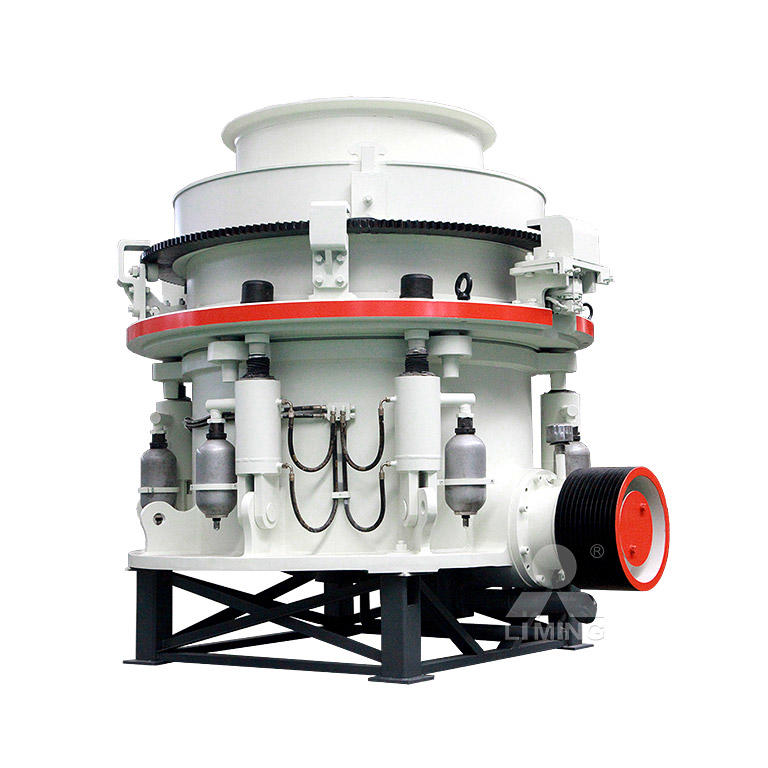
What Is a Cone Crusher? The Efficiency King of Hard Rock Crushing
A cone crusher is the primary equipment used in the secondary and tertiary crushing stages for hard rock such as granite, basalt, and pebble. It directly determines finished product shape, capacity stability, and long-term operating cost.
In mining and aggregate production, a cone crusher is often the most important machine after the primary jaw crusher. It reduces rock from roughly 100–300 mm down to 5–40 mm, depending on the cavity type and closed side setting. For anyone searching for the best cone crusher for secondary crushing or a tertiary cone crusher for manufactured sand, the selection usually comes down to four main series:
·Spring cone crusher
·Single-cylinder hydraulic cone crusher
·Multi-cylinder hydraulic cone crusher
·Symons cone crusher
Each type has a different sweet spot. Choosing the wrong one can lead to poor product shape, high wear cost, or unstable output.
How Does a Cone Crusher Work?
A cone crusher breaks rock through a gyrating motion. The eccentric sleeve drives the main shaft, causing the mantle liner to periodically move toward and away from the concave liner. Material inside the crushing chamber is compressed, bent, and sheared until it is small enough to pass through the discharge opening.
The key to cone crusher performance is the combination of eccentric throw and stroke. For example, in one fine-cavity configuration with an eccentric throw of 32 mm and a stroke of 28 mm, granite can be crushed to a continuous 0–31.5 mm gradation with needle-flake content controlled below 8%. This meets the quality requirements of most ready-mix concrete plants.
In simple terms: the right eccentric throw and stroke give you better particle shape, higher throughput, and more stable operation. The wrong combination creates excessive fines, poor shape, or unnecessary wear.
How to Choose Among the Four Cone Crusher Types
| Cone Crusher Type | Best For | Typical Capacity | Key Advantages | Limitations |
|---|---|---|---|---|
| Spring cone crusher | Budget-limited small and medium mines | Up to 200–300 t/h | Simple structure, low initial cost, easy maintenance | Lower automation, less precise cavity control |
| Single-cylinder hydraulic cone crusher | Secondary crushing, modern automated mines, hard and mixed feed, large lumps, blockage-prone conditions | 85–210 t/h and above | Simple structure, easy maintenance, strong overload protection, good for complex feed | Not always the best for ultra-fine, high-spec aggregate |
| Multi-cylinder hydraulic cone crusher | Tertiary crushing, premium aggregate lines, highway surface material, nuclear power sand and gravel | Medium to high capacity | Higher crushing force, better particle shape, finer product | Higher initial cost and more complex maintenance |
| Symons cone crusher | Most hard rock crushing scenarios | Medium to high capacity | Good compatibility, proven design, widely used | Older technology, less automation than modern hydraulic types |
Simple selection logic
·Hard rock, mixed feed, large lumps, blockage-prone: choose a single-cylinder hydraulic cone crusher.
·Need excellent particle shape, fine product, and premium specification: choose a multi-cylinder hydraulic cone crusher.
·Budget-limited, small to medium capacity: a spring cone crusher may be enough.
·General hard rock crushing with broad compatibility: a Symons cone crusher remains a practical option.
For most new hard rock projects in 2026, the real decision is usually single-cylinder vs multi-cylinder cone crusher. Single-cylinder machines are favored for secondary crushing and difficult feed conditions. Multi-cylinder machines are favored for tertiary crushing and high-quality aggregate production.
Key Technical Parameters for Cone Crusher Selection
When comparing cone crushers, focus on these parameters:
·Feed size: Maximum feed opening must match the largest lump in your feed.
·Closed side setting (CSS): Controls product size and capacity. Smaller CSS means finer product but lower throughput.
·Capacity (t/h): Must match your target production and the rest of the crushing circuit.
·Motor power: Determines crushing force and ability to handle hard rock.
·Machine weight: Affects foundation design, transportation, and installation cost.
·Wear part life: Mantle and concave life directly affects operating cost.
Example: one single-cylinder cone crusher has a feed opening of 210 mm, a capacity of 85–210 t/h, and a total machine weight of about 25 tonnes. This class of machine is often used as a secondary crusher in medium-sized hard rock plants.
For granite and basalt, pay close attention to cone crusher wear parts life. Under typical granite conditions, high-quality liners can last around 800–1,500 hours. New-generation designs, such as Metso’s HPe series, improve the mantle suspension point and optimize the cavity profile, which can significantly extend wear part life.
Common Selection Mistakes to Avoid
1、Choosing a cone crusher only by price. A lower purchase price often means higher wear cost and lower uptime.
2、Ignoring feed size distribution. A cone crusher performs best with proper choke feeding and a controlled feed gradation.
3、Using the wrong cavity for the application. Standard, medium, and short-head cavities are designed for different crushing stages.
4、Underestimating automation. Modern hydraulic cone crushers offer automatic CSS adjustment, overload protection, and remote monitoring, which reduce downtime.
5、Forgetting about wet and sticky material. If your ore contains high clay or moisture, you may need a washing stage or a large-eccentric-throw, large-stroke cavity design to reduce blockage risk.
Frequently Asked Questions (FAQ)
Single-cylinder vs multi-cylinder cone crusher—which is better?
There is no absolute winner. A single-cylinder cone crusher has a simpler structure, is easier to maintain, and is well suited to secondary crushing and complex operating conditions. A multi-cylinder cone crusher provides greater crushing force, better particle shape, and finer product, making it ideal for tertiary crushing and premium aggregate lines. The right choice depends on your rock hardness and finished product requirements.
Can a cone crusher process wet and sticky material?
A cone crusher has limited adaptability to wet and sticky feed. If the ore has high clay content, adding a washing stage before the cone crusher is recommended. Alternatively, choose a cavity design with a large eccentric throw and long stroke to reduce blockage risk.
How often should cone crusher wear parts be replaced?
Liner life depends on material abrasiveness and operating parameters. Under typical granite conditions, high-quality liners can last about 800–1,500 hours. New-generation models such as the Metso HPe series use an improved mantle suspension point and optimized cavity design to significantly extend wear life.
What is CSS in a cone crusher, and why does it matter?
CSS stands for closed side setting. It is the smallest gap between the mantle and concave at the discharge point. CSS directly controls product size, capacity, and power draw. Adjusting CSS is the main way to change the finished product gradation. A smaller CSS produces finer material but reduces throughput and increases wear.
Can a cone crusher produce manufactured sand?
Yes, but a cone crusher is usually used for secondary or tertiary crushing rather than final sand shaping. For manufactured sand, a VSI sand making machine is typically added after the cone crusher to improve particle shape and control the 0–5 mm fraction. A cone crusher can prepare the feed for the VSI and reduce the load on the sand making stage.
What is the best cone crusher for granite and basalt?
For granite and basalt, a hydraulic cone crusher is generally preferred. Single-cylinder hydraulic cone crushers work well in secondary crushing, while multi-cylinder hydraulic cone crushers are often chosen for tertiary crushing and high-quality aggregate production. The final selection depends on feed size, target capacity, and product specification.
FairTradeMachinery
You Design the Vision. We Handle the Hard Parts.
Helping Global Buyers Access Better-Value Machinery and After-Sales Solutions.
As China's Leading Global Used Machinery Exchange Platform, we sits at the intersection of IoT technology and B2B commerce. That means real-time inventory data, verified seller profiles, and a transaction process designed for cross-border buyers who can't always inspect machines in person. Our users in China have exceeded 1.5 millions meaning we have the first source of excavator owners and the equivalent number of machines. This means we can cover all the popular models and even specific needs, no matter of the status.






 Live Chat On Whatsapp Now


 FAQs
 WhatsApp