Impact Crusher Buying Guide 2026: The Efficient Choice for Medium and Low Hardness Materials
Quick answer: An impact crusher is a cost-effective crushing machine for medium and low hardness materials such as limestone and dolomite. It offers a high reduction ratio, cubic product shape, and selective crushing. It is widely used in hydropower, highway, railway, and artificial sand and gravel production. However, it is not ideal for highly abrasive materials with high silica content, where a cone crusher is usually a better choice.
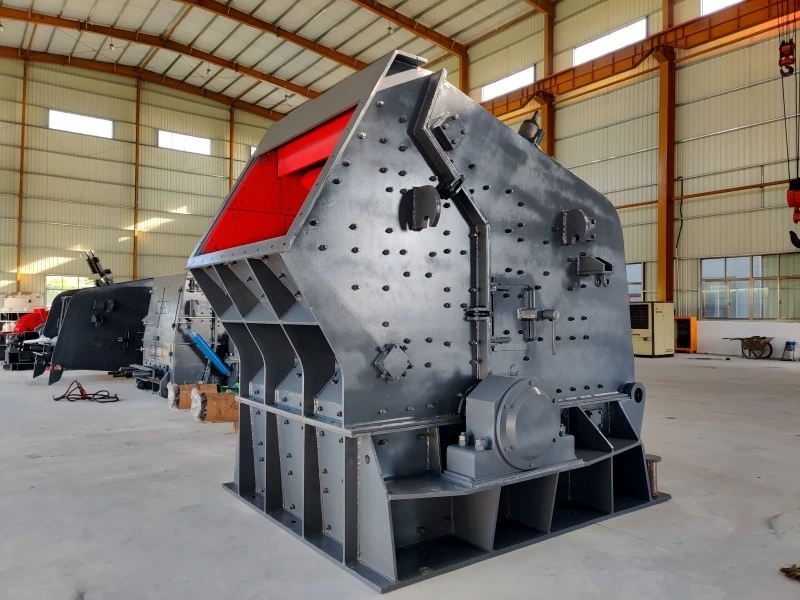
What Is an Impact Crusher? A Cost-Effective Choice for Impact Crushing
An impact crusher is a crushing machine that uses impact energy to break materials. It can process various coarse, medium, and fine materials with a feed size of no more than 120–500 mm and a compressive strength not exceeding 320 MPa. Its core advantages are a high reduction ratio, cubic product shape, and selective crushing.
In the aggregate and mining industry, the impact crusher is often chosen for secondary and tertiary crushing of limestone, concrete recycling, and high-quality aggregate production. If you are searching for the best impact crusher for limestone crushing or a cost-effective impact crusher for medium hardness rock, this guide will help you understand how it works and where it fits.
How Does an Impact Crusher Work?
Driven by an electric motor, the rotor rotates at high speed. When material enters the blow bar impact zone, it is struck and broken by the blow bars on the rotor. It is then thrown against the impact plates for secondary crushing, and rebounds from the impact liners back into the blow bar zone for further crushing. This process repeats as the material moves through the first, second, and third impact chambers, gradually being reduced until it reaches the required size.
The output size and product shape can be adjusted by changing the gap between the impact apron and the rotor. A smaller gap produces a finer output, while a larger gap produces a coarser output. Some models are equipped with hydraulic adjustment devices, allowing the gap to be adjusted without stopping the machine.
Typical Applications of Impact Crushers
Impact crushers are widely used in hydropower, highways, railways, and artificial sand and gravel fields. They are best suited for:
·Medium and low hardness materials such as limestone and dolomite
·Recycled materials such as concrete and construction waste
·Aggregate production lines with high requirements for finished product shape
Purchasing tip: Impact crushers are suitable for materials with low abrasiveness. If the material has high silica content and strong abrasiveness, the blow bar wear rate will increase significantly. In this case, a cone crusher should be considered instead.
For limestone impact crusher selection, the impact crusher is often the most economical choice because it combines high reduction ratio and good product shape in one machine. For construction waste impact crusher applications, it can handle mixed feed and produce reusable aggregate. However, for granite impact crusher applications, wear cost must be carefully evaluated.
Key Factors in Impact Crusher Selection
When choosing an impact crusher, consider the following factors:
Feed size: The maximum feed size must match the machine’s inlet opening.
• Compressive strength: Generally suitable for materials up to 320 MPa, but abrasiveness matters more than compressive strength.
• Reduction ratio: Impact crushers can achieve a high reduction ratio, often reducing material from 500 mm to below 25 mm in one pass.
• Product shape: Impact crushers produce a more cubic product with less needle-flake content, which is ideal for concrete aggregate.
• Blow bar material: High-chrome blow bars offer better wear resistance for abrasive materials.
• Adjustment method: Hydraulic adjustment allows quick and safe changes to output size.
If your material is limestone, dolomite, or similar medium-low hardness rock, an impact crusher can be the most cost-effective solution. If your material is granite, basalt, or river pebble with high silica content, a cone crusher is usually more economical in the long run.
Frequently Asked Questions (FAQ)
What is the difference between an impact crusher and a hammer crusher?
An impact crusher has an adjustable gap between the blow bars and the impact plates, giving more precise control over output size and better particle shape. A hammer crusher relies on hammer impact and grate screening, and its output size is controlled by the grate gap. A hammer crusher is more suitable for medium-low hardness brittle materials. An impact crusher has a larger processing capacity and is better for large-scale production.
Can an impact crusher crush granite?
Yes, but granite is highly abrasive, so blow bar wear will be relatively fast. If granite is the main material and operating cost is a concern, it is recommended to prioritize a cone crusher or a jaw crusher + cone crusher combination.
How do you adjust the output size of an impact crusher?
The output size is adjusted by changing the gap between the impact apron and the rotor. A smaller gap produces a finer output; a larger gap produces a coarser output. Some models are equipped with hydraulic adjustment devices that allow this to be done without stopping the machine.
What is the best impact crusher for limestone?
For limestone, a horizontal shaft impact crusher with hydraulic adjustment and high-chrome blow bars is usually the best choice. It provides a high reduction ratio, excellent cubic shape, and low operating cost when the silica content is low.
Can an impact crusher be used for construction waste recycling?
Yes. Impact crushers are widely used in construction waste recycling because they can handle mixed feed and produce reusable aggregate with good shape. However, reinforcing steel and other uncrushable objects should be removed before crushing to avoid damage to the rotor and blow bars.
FairTradeMachinery
You Design the Vision. We Handle the Hard Parts.
Helping Global Buyers Access Better-Value Machinery and After-Sales Solutions.
As China's Leading Global Used Machinery Exchange Platform, we sits at the intersection of IoT technology and B2B commerce. That means real-time inventory data, verified seller profiles, and a transaction process designed for cross-border buyers who can't always inspect machines in person. Our users in China have exceeded 1.5 millions meaning we have the first source of excavator owners and the equivalent number of machines. This means we can cover all the popular models and even specific needs, no matter of the status.






 Live Chat On Whatsapp Now


 FAQs
 WhatsApp