Jaw Crusher Buying Guide 2026: What Is the Best Primary Crushing Equipment?
If you need to crush hard rock from up to 800mm down to 100–400mm, a jaw crusher is the most reliable primary crushing equipment for mining, aggregates, and construction waste recycling. This 2026 jaw crusher buying guide covers how jaw crushers work, key specifications, applications, and how to choose between PE and European version jaw crushers.
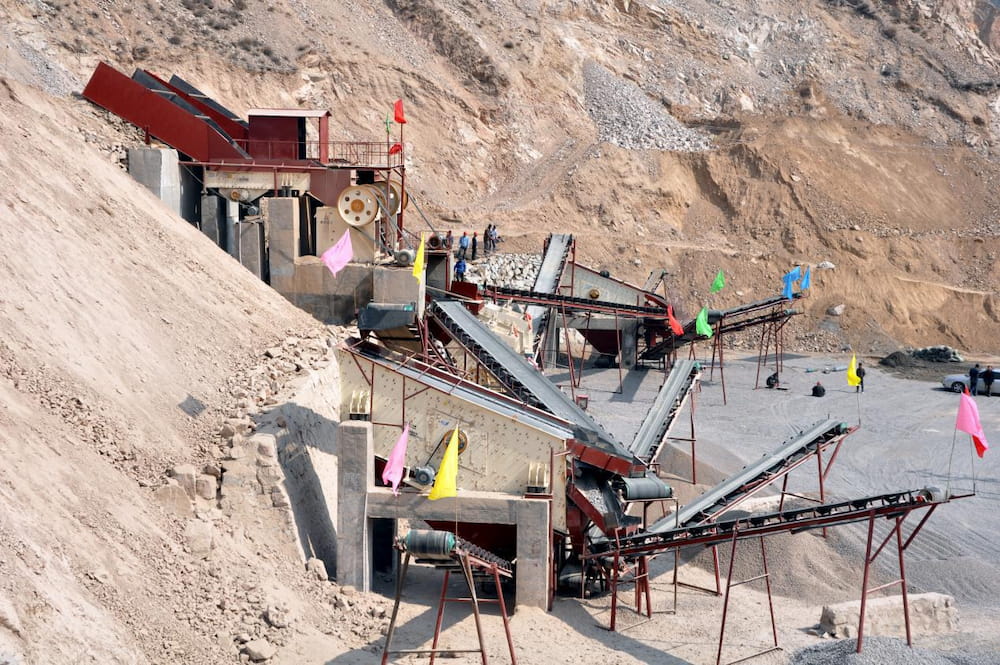
What Is a Jaw Crusher? The First Stage of Mining Crushing
A jaw crusher is the core equipment for primary crushing in mining, metallurgy, building materials, and chemical industries. For materials with Mohs hardness above 6, a jaw crusher is often the only universal equipment that can reliably complete coarse crushing.
How does a jaw crusher work?
The core mechanism is “crank-connecting rod reciprocating compression crushing.” The motor drives the belt pulley, which transmits power to the eccentric shaft. The eccentric shaft drives the movable jaw to swing back and forth periodically. The angle between the movable jaw and fixed jaw decreases and increases cyclically, causing materials in the V-shaped crushing chamber to be continuously squeezed, broken, and split. Once the material reaches the required particle size, it discharges from the bottom discharge opening. The material goes through four stages: feeding, crushing, discharging, and closed-loop control. Hydraulic adjustment systems can monitor discharge size in real time and automatically adjust the movable jaw stroke.
Key Jaw Crusher Specifications You Must Check
When choosing a jaw crusher, focus on these technical parameters:
· Feed size: Jaw crushers can handle feed sizes up to 800mm, making them ideal for large run-of-mine ore.
· Discharge opening adjustment range: Directly affects final product size. Hydraulic adjustment allows continuous adjustment without stopping production.
· Capacity (t/h): Match to your target production capacity. Jaw crushers are usually the first stage in a production line.
· Motor power: Determines whether the equipment can crush brittle materials with Mohs hardness around 7.
· Jaw plate material: Manganese steel jaw plates offer wear resistance, high compressive strength, and long service life, making them suitable for hard materials.
What Applications Is a Jaw Crusher Best For?
Jaw crushers dominate the primary crushing stage and are designed to handle large blocks of raw ore. They are widely used in:
· Primary crushing in metal mines (iron ore, copper ore, gold ore)
· Head crushing in sand and aggregate production lines
· Construction waste recycling · Laboratory sample preparation (small jaw crushers)
Buying tip: If the ore has high mud content, configure a washing device before the jaw crusher or choose an anti-clogging chamber design.
Jaw Crusher vs Cone Crusher: What’s the Difference?
Comparison | Jaw Crusher | Cone Crusher |
|---|---|---|
Crushing stage | Primary coarse crushing | Secondary / tertiary crushing |
Feed size | Up to 800mm | Usually up to 200mm |
Product size | 100–400mm | 25–100mm |
Best for | Hard, large blocks | Hard rock, finer output, better shape |
Typical use | First stage | Second or third stage |
Jaw crushers and cone crushers are usually used together: jaw crusher first, cone crusher second.
PE Jaw Crusher vs European Jaw Crusher: Which One Should You Choose?
· PE jaw crusher: Classic structure, cost-effective, suitable for small and medium-sized production lines.
· European version jaw crusher: Advanced chamber design and hydraulic adjustment system, suitable for large projects with high automation and capacity requirements.
Choose based on your budget and capacity target. For most primary crushing applications, both can handle hard rock, but the European version offers better automation and throughput.
Frequently Asked Questions (FAQ)
What is the difference between a jaw crusher and a cone crusher?
A jaw crusher is mainly used for primary coarse crushing with a large feed size (up to 800mm) and is suitable for hard, large blocks. A cone crusher is used for secondary and tertiary crushing, producing finer output with better particle shape. They are usually paired together: jaw crusher first, cone crusher second.
What materials can a jaw crusher crush?
It can crush various materials with compressive strength not exceeding 320MPa, including granite, basalt, iron ore, limestone, river pebbles, and more. It is the preferred equipment for primary crushing in mining.
Should I choose a PE jaw crusher or a European version jaw crusher?
PE jaw crushers have a classic structure and high cost-effectiveness, suitable for small and medium-sized production lines. European version jaw crushers use advanced chamber design and hydraulic adjustment systems, suitable for large projects with high automation and capacity requirements. Evaluate based on your budget and production goals.
What is the maximum feed size for a jaw crusher?
Most standard jaw crushers can handle feed sizes up to 800mm, depending on the model. Always check the specific model’s maximum feed size before purchasing.
How often should jaw plates be replaced?
Jaw plate life depends on material abrasiveness and operating parameters. Under typical granite crushing conditions, high-quality manganese steel jaw plates can last 800–1,500 hours. Regular inspection is recommended.
FairTradeMachinery
You Design the Vision. We Handle the Hard Parts.
Helping Global Buyers Access Better-Value Machinery and After-Sales Solutions.
As China's Leading Global Used Machinery Exchange Platform, we sits at the intersection of IoT technology and B2B commerce. That means real-time inventory data, verified seller profiles, and a transaction process designed for cross-border buyers who can't always inspect machines in person. Our users in China have exceeded 1.5 millions meaning we have the first source of excavator owners and the equivalent number of machines. This means we can cover all the popular models and even specific needs, no matter of the status.






 Live Chat On Whatsapp Now

 FAQs
FAQs WhatsApp